Now that AI meeting assistants are the norm, the question is — which one should you use?
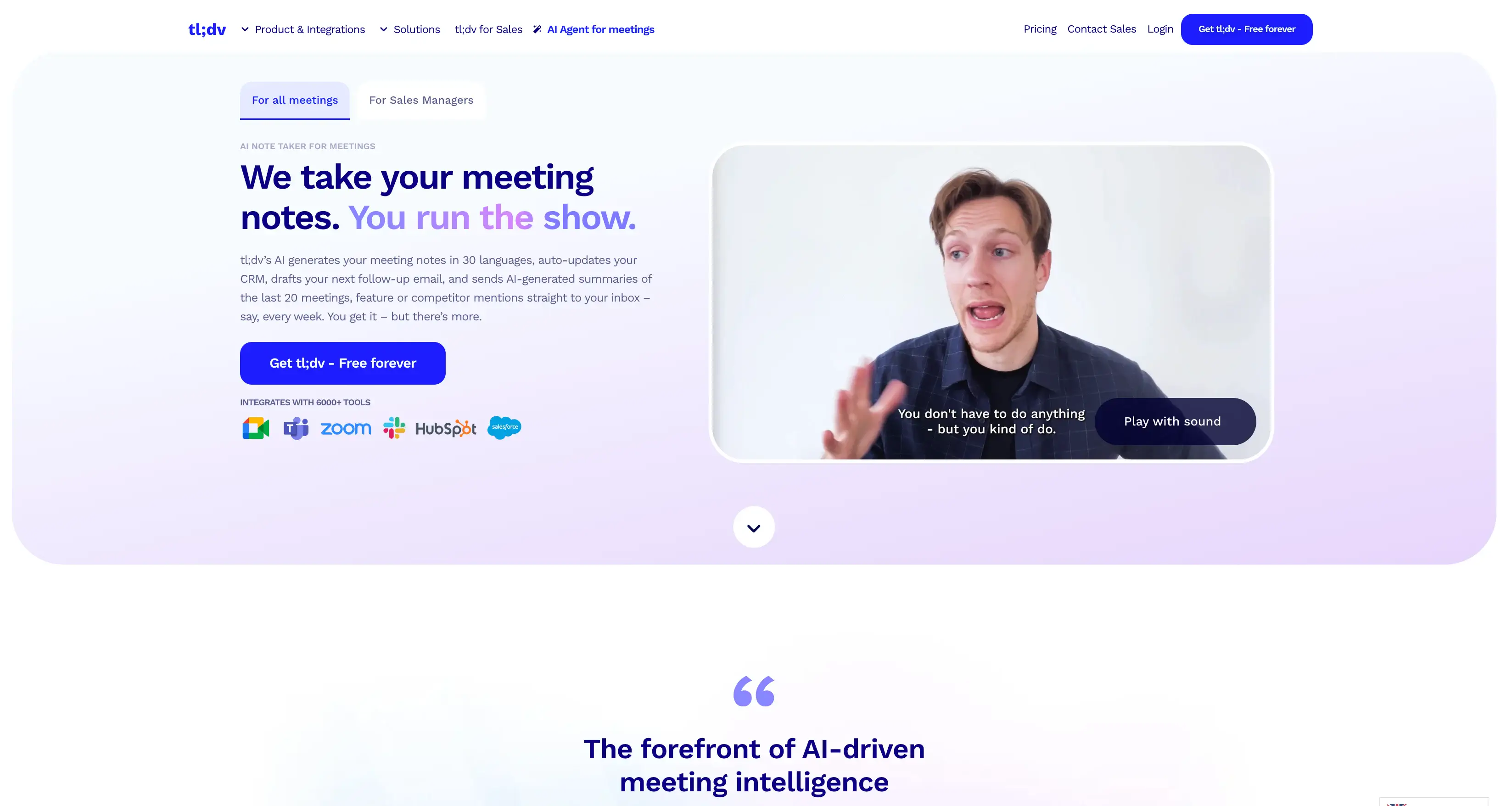
For many, tl;dv (short for too long, didn’t view) was the answer. It transcribes and records online meetings on Zoom, Microsoft Teams, and Google Meet. Then, it automatically highlights key moments — and lets you clip and share short reels with colleagues, without forcing them to view an hour of footage from the meeting.
While useful, I’ve noticed tl;dv has a few serious drawbacks — including intrusive bot-only recording, and pricey paid plans for teams.
As a result, you’re probably looking for a decent tl;dv alternative. To help you, I’ve tested more than 20 of the best AI note takers. Here are my top 3 choices for 2026.
What Are the Top TL;DV Alternatives?
After trying out two dozen AI meeting assistants, I’ve concluded that these 3 are the best tl;dv replacements:
- Bluedot
- Claap
- Gong
#1. Bluedot — Best TL;DV Alternative Overall
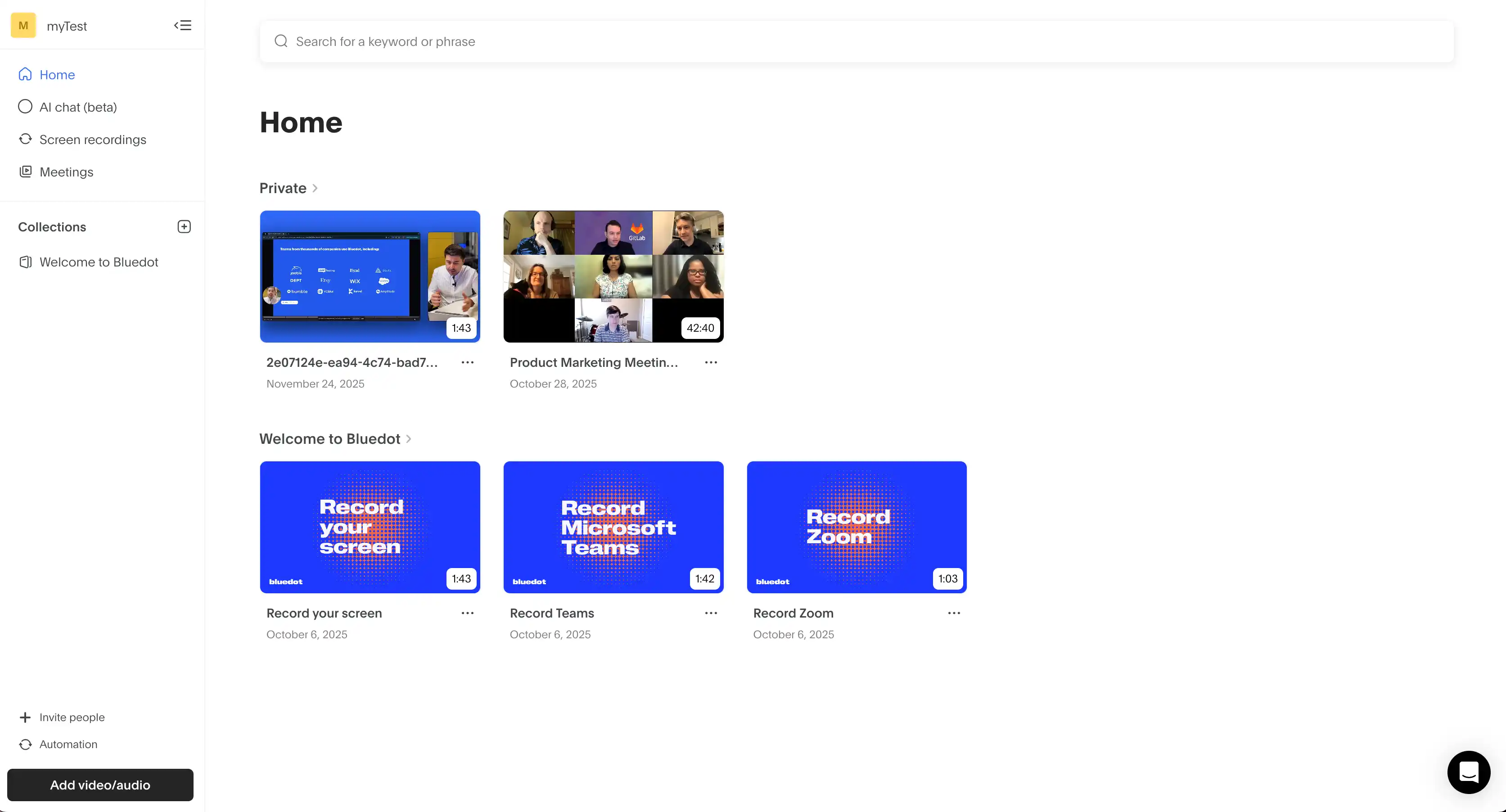
Bluedot is an AI meeting assistant that can record, transcribe, and summarize your meetings — both online and in-person.
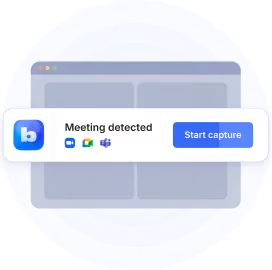
Unlike many tl;dv alternatives, Bluedot can work without a bot — instead, it can record meetings through a Chrome extension, desktop, or mobile app. I like that because it doesn't disrupt my calls with an ominous AI bot participant.
For sales teams, this is a huge advantage — you can start discussing your product and its advantages right away. You don't have to spend the first 5 minutes of a call awkwardly explaining why there's an off-putting bot there.
Let's see what else Bluedot can do — and why it's about to become your favorite AI meeting tool.
Bluedot vs. tl;dv — Key Features Compared
Let's get straight to the point — Bluedot doesn't limit you nearly as much as tl;dv does.
For starters, Bluedot's $25-per-month Pro tier comes with unlimited meetings and video recording — for an unlimited duration. You also get full access to customizable AI templates for your meeting notes, as well as the AI chat.
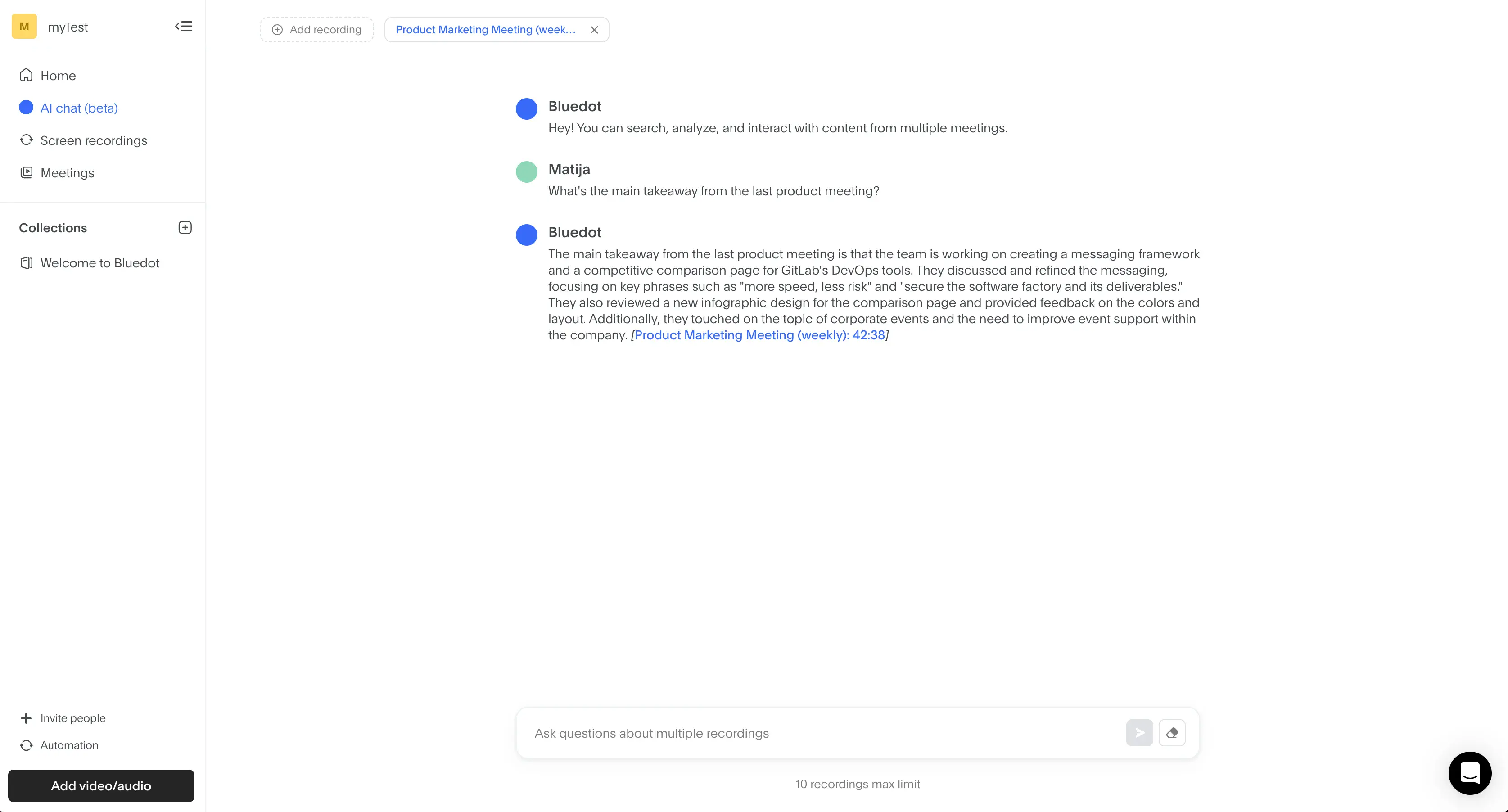
The chat was useful for me because it always provided relevant answers to my questions about past calls. No hallucinations you get with other tools, and no vague stuff I could've concluded on my own. Just real conversation intelligence.
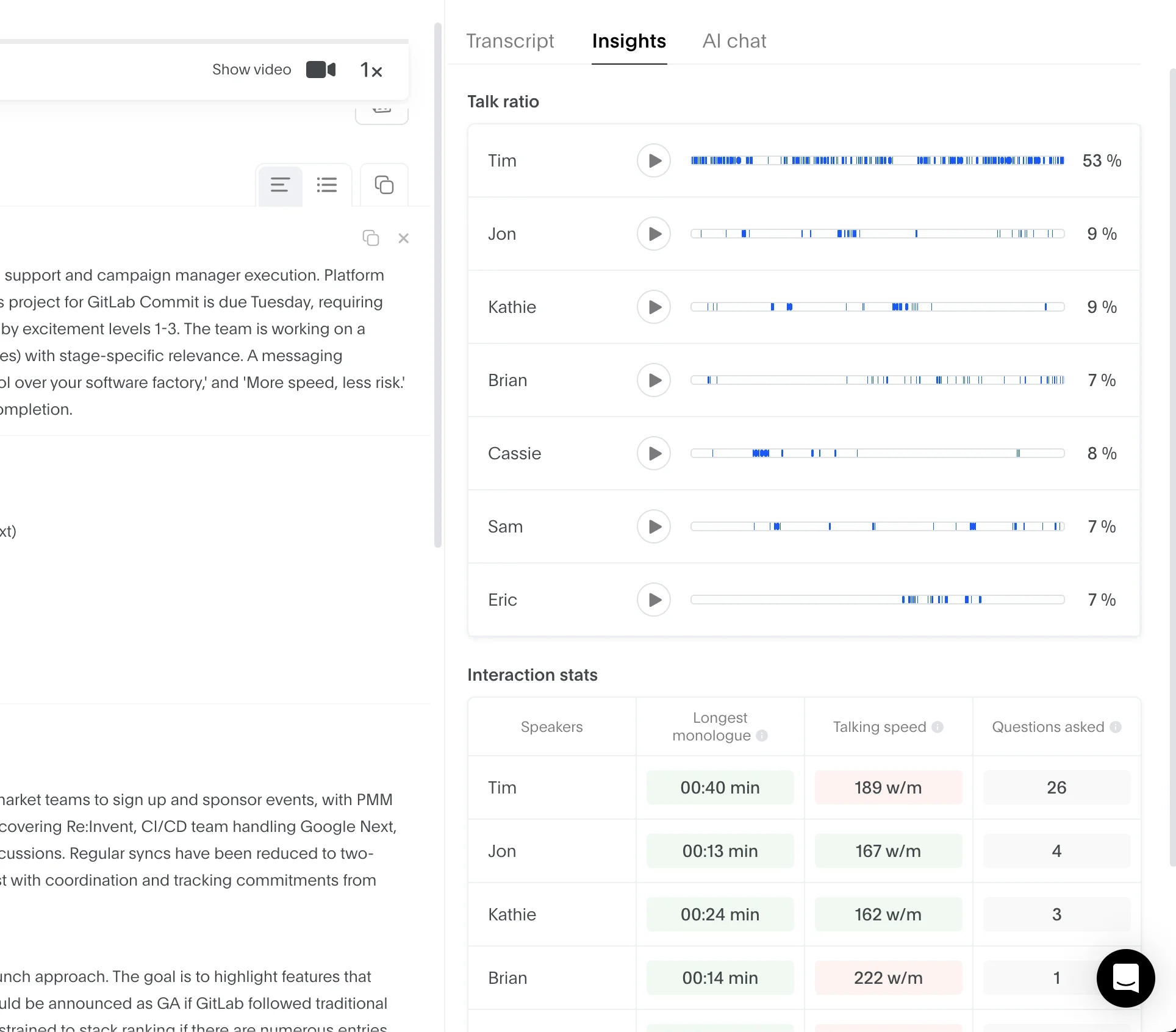
In the Insights tab, Bluedot also gives you relevant information about each speaker — talk ratios, speeds, number of asked questions, and monologue length. None of it is hidden behind the priciest subscriptions, like with tl;dv.
Also, Bluedot doesn't limit the number of simultaneous calls your team can record and transcribe. And there's no difference between the transcription accuracy on lower and higher tiers — everyone gets the same premium-quality subscription.
Last but not least, Bluedot is a better choice if you work in a global team — it supports 100+ languages, compared to tl;dv's 30.
How Much Does Bluedot Cost?
Here's a quick look at Bluedot's different subscriptions:
For me, Bluedot provides more value than tl;dv at each subscription tier — despite a relatively constricting free plan with only.5 meetings. The Basic plan will probably be sufficient for individual users, while sales teams that value CRM integration should consider the Business tier.
Bluedot Pros and Cons
Below is a table outlining the key pros and cons of Bluedot:
#2. Claap — Great for lemlist Users
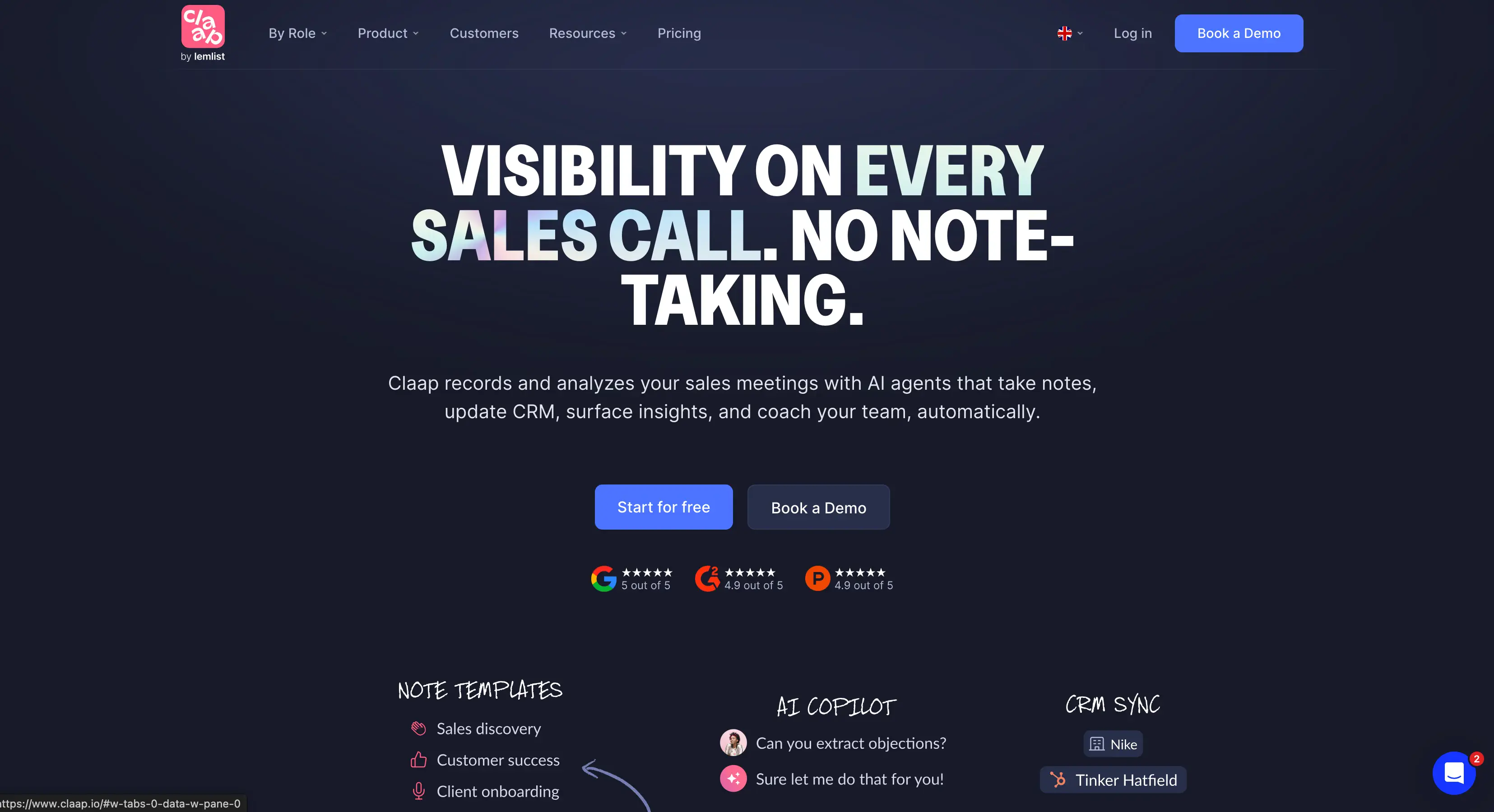
Claap is an AI-powered meeting intelligence platform, primarily designed for sales teams.
Initially, Claap was a standalone startup — before being acquired by lemlist in late 2025. If you work in sales, you've probably heard of lemlist. It's a popular lead generation and outreach platform, so you can see how Claap was a logical next step.
While lemlist helps you reach the right prospects, Claap is there to help with the actual sales meeting. It can record and transcribe meetings, before providing detailed sales-specific notes.
The reason I ranked it so high as a tl;dv alternative is simple — it lets you record calls bot-free. However, Claap might not be the right fit if you're not a sales rep or manager.
Claap vs. tl;dv — Meeting Assistants Compared
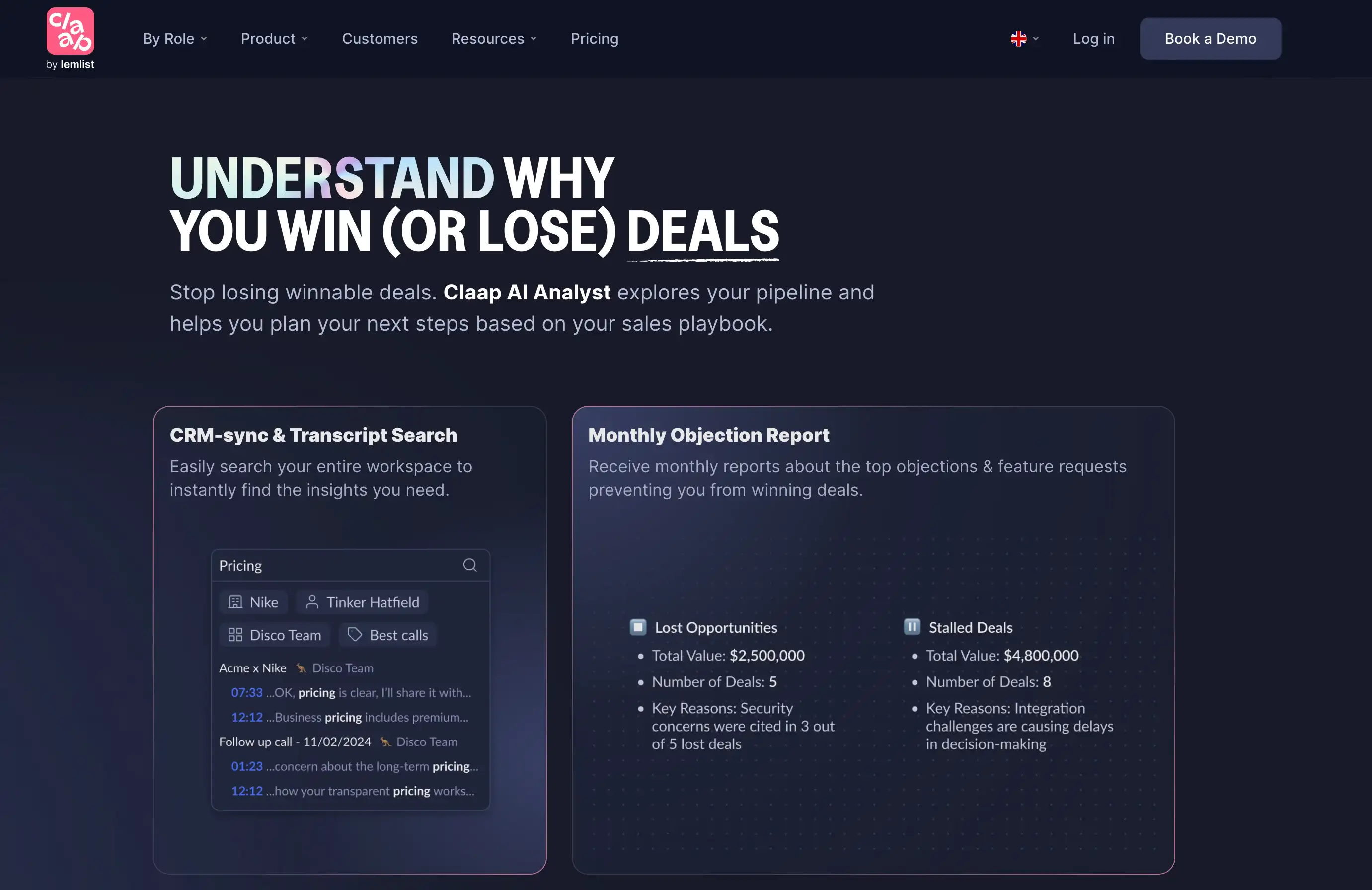
So, Claap can record and transcribe calls from Zoom, Google Meet, and Microsoft Teams — in over 99 languages.
In terms of language support, that puts it up there with Bluedot, and way ahead of tl;dv. It's a great choice for multilingual sales teams.
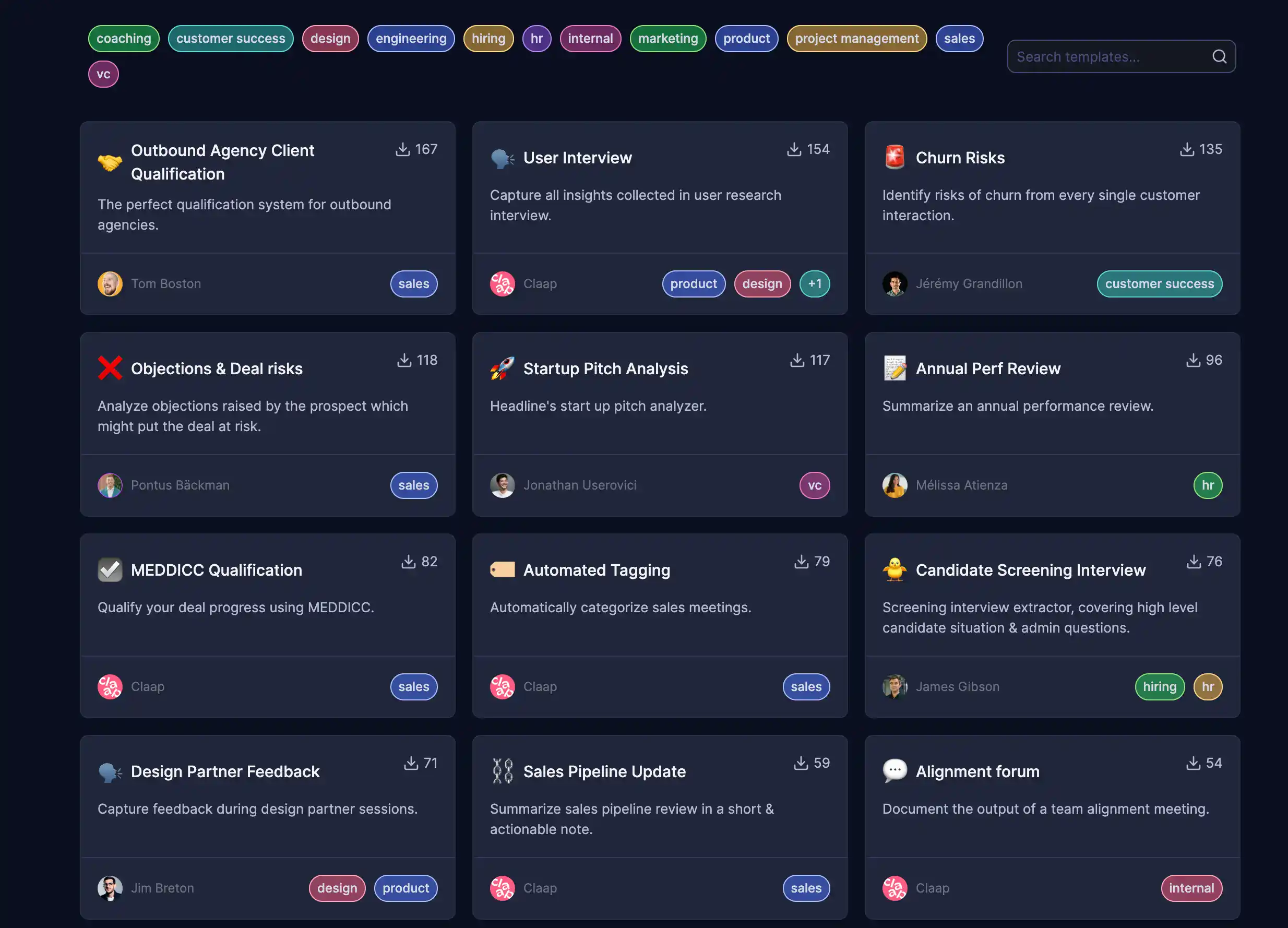
For sales reps, the AI meeting notes you get based on your meetings are definitely useful. You can choose from all kinds of sales-related templates, including:
- User Research
- Product Demo
- Discovery Call
- Sales Pipeline Update
It also connects to lemlist. You can use Claap to gather insights during calls — for example, a prospect mentioning a specific pain point. Then, you can feed those insights back into lemlist to personalize future outreach to that particular prospect.
However, I feel like Claap tries to do a bit too much for sales intelligence. It has its own Deal Intelligence screen, where you can track deals based on conversations recorded in Claap.
The trouble is, most sales reps don't want another platform that's trying to be Salesforce — they just want a platform that connects to Salesforce and feeds it data. And yeah, Claap can also do that via API.
On the other hand, I didn't like that Claap didn't let me register without a phone number. AI tools and their owners already have too much of my information as it is.
How Much Does Claap Cost?
Here's an overview of various Claap free and paid plans:
As you can see, the prices are quite high — especially considering the various accompanying limits.
Even with the pricey Business plan, you have a cap for monthly uploads. The only way to get unlimited recordings and uploads is with the custom-priced Enterprise plan.
The same goes for storage. Claap deletes recordings of Pro and Business users after 2 and 3 years, respectively — unlimited retention is only available for Enterprise users. At every step of the way, Claap pushes you towards the Enterprise tier quite forcefully.
Also, you don't get AI sales coaching features with the Pro plan. The bottom line is — Claap is only a great choice for large sales teams with huge budgets. For other use cases, you'd be better off with a more reasonably priced AI meeting assistant.
Claap Pros and Cons
#3. Gong — Great for Revenue Teams
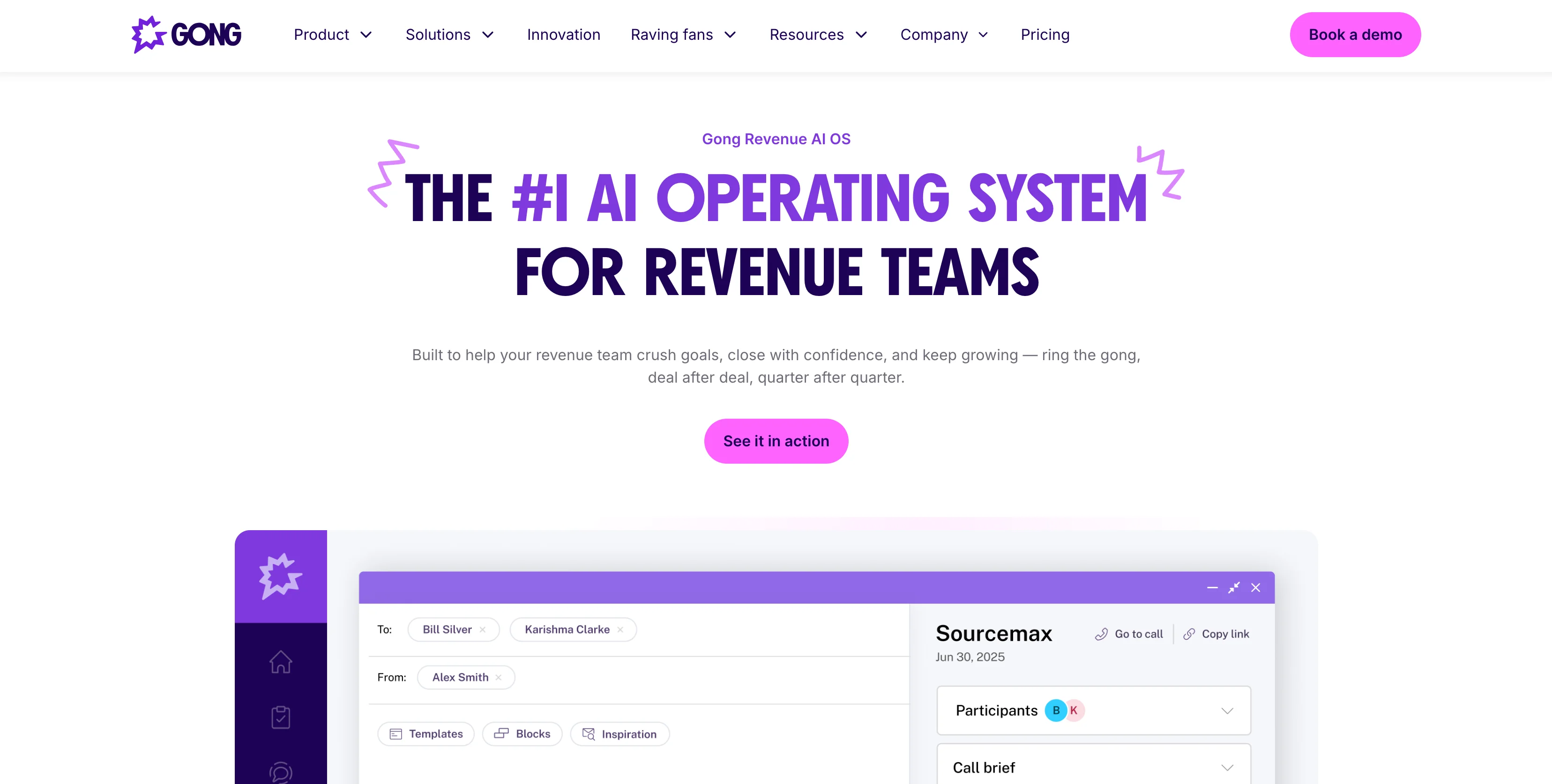
Like Claap, Gong is an AI tool aimed at sales teams. Beyond recording and transcribing calls, Gong also provides advanced revenue intelligence features.
That being said, their claim of being an "AI operating system for revenue teams" is overblown. Anyone who knows what an OS is will likely laugh at the claim. At the end of the day, Gong is just another revenue intelligence platform.
The main difference between Gong and the other tl;dv alternatives on this list is that Gong doesn't just analyze video calls — it also collects information from your emails and other conversation points.
Let's see how well Gong works in practice.
Gong vs. tl;dv — AI Meeting Assistants Analyzed
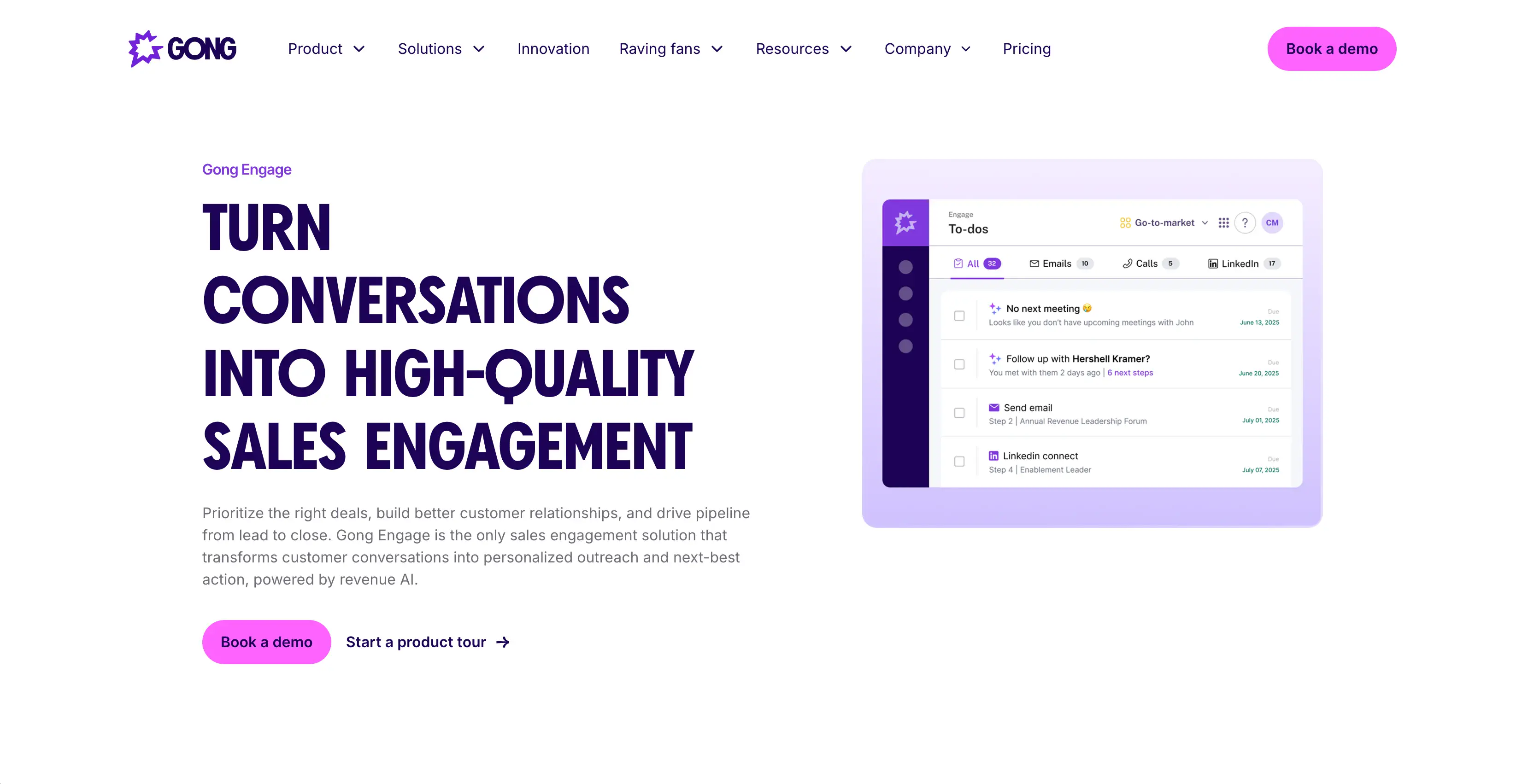
Gong wants to be your central touchpoint for all conversations between your sales reps and customers. And instead of your reps entering notes into Salesforce manually, Gong records, analyzes, and transcribes meetings — and then does this for you.
However, most other AI note takers like Bluedot can also do this. What Gong promises to deliver is a wider range of information outputs. Besides Zoom, Microsoft Teams, and Google Meet, Gong also connects to your email account and VOIP systems.
In short, it can collect more info from more sources. Through the Gong Revenue Graph, the platform can map different interactions with the same prospect into an actual revenue projection.
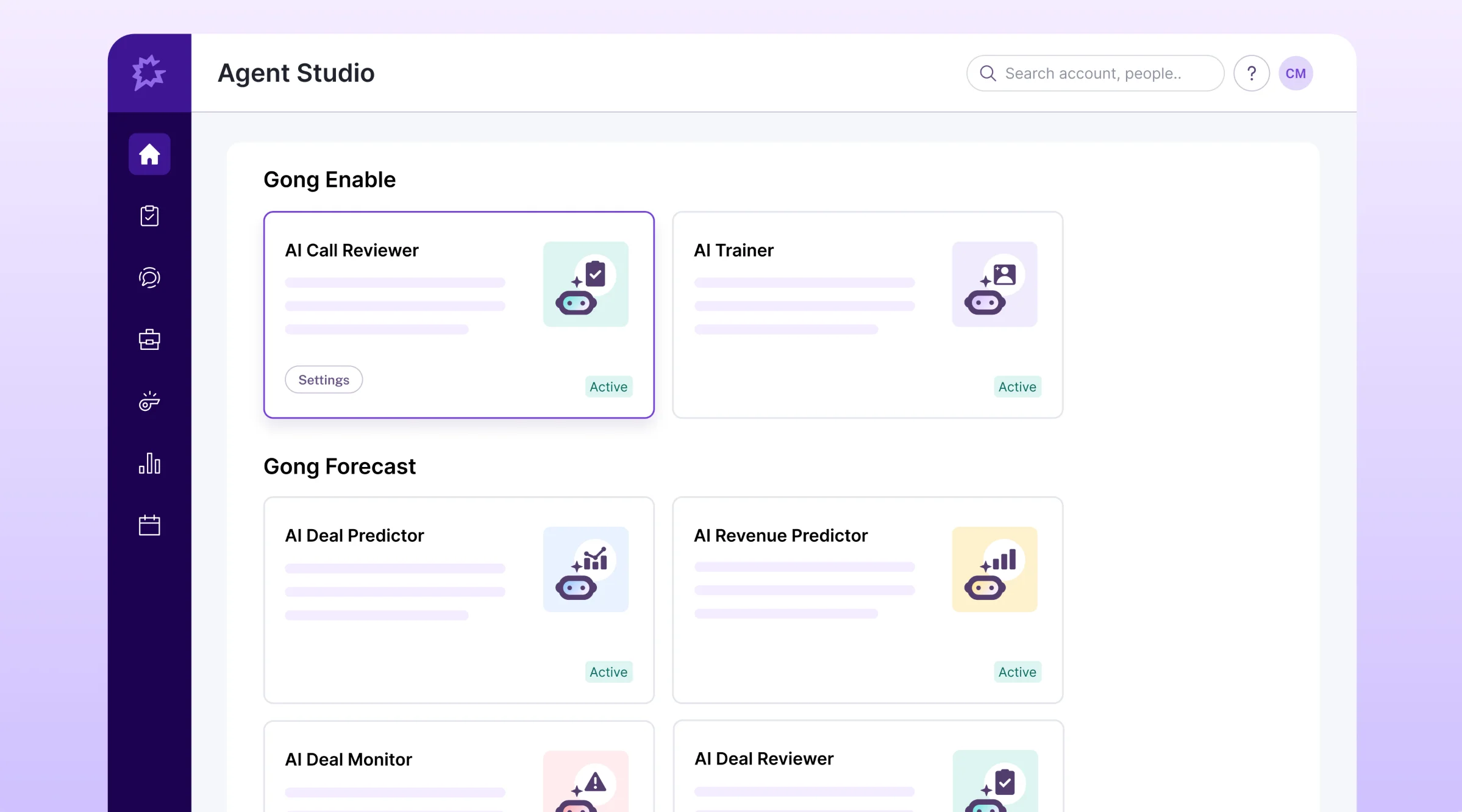
So far, so good — but while Gong is often used by large organizations with sizable budgets, it's often seen as over-built for small-to-mid-sized sales teams. There are too many features you don't need in a team of that size, and you probably don't have the budget for this software.
The learning curve is also steep, with an overly cluttered interface. And the customer support is often unresponsive or even uninformed — some users suspect it's mostly outsourced outside of the company.
Finally, it uses a bot to record calls, much like tl;dv. I'm not sure that the additional revenue intelligence features outweigh the lack of a bot-free recording option, which makes actual sales calls less awkward on platforms like Bluedot.
How Much Does Gong Cost?
Gong doesn't provide any details on team plans or key points in different subscriptions, at least not publicly. You'd have to speak to their own sales reps to get an estimate — which is a huge downside compared to tl;dv alternatives with transparent pricing, like Bluedot and Claap.
However, some users on Reddit report that they were charged a base annual price of $5000, plus $1400 per user. At those prices, you'd be better off getting a simpler AI meeting assistant and a ChatGPT subscription for analysis.
And there's another point worth mentioning — many of the sales reps report feeling micromanaged after Gong was introduced, because it tracks too many metrics that don't necessarily result in sales. I'm not a sales manager myself though, so you be the judge of that.
Gong Pros and Cons
Why Do You Need a TL;DV Alternative?
Even if you’re currently happy with tl;dv, there a few reasons to switch:
- High price for teams
- Recording with an intrusive bot
- Slow customer support
- Limited language support
Read More: Comprehensive tl;dv Review
#1. It's Too Expensive for Teams
I appreciate that tl;dv offers a generous free plan with unlimited meetings and video recording. However, I quickly noticed that its "Free Forever" title is somewhat misleading.
With the free plan, tl;dv deletes your recordings after three months. So, the "free forever plan" is really just a trial version of the app.
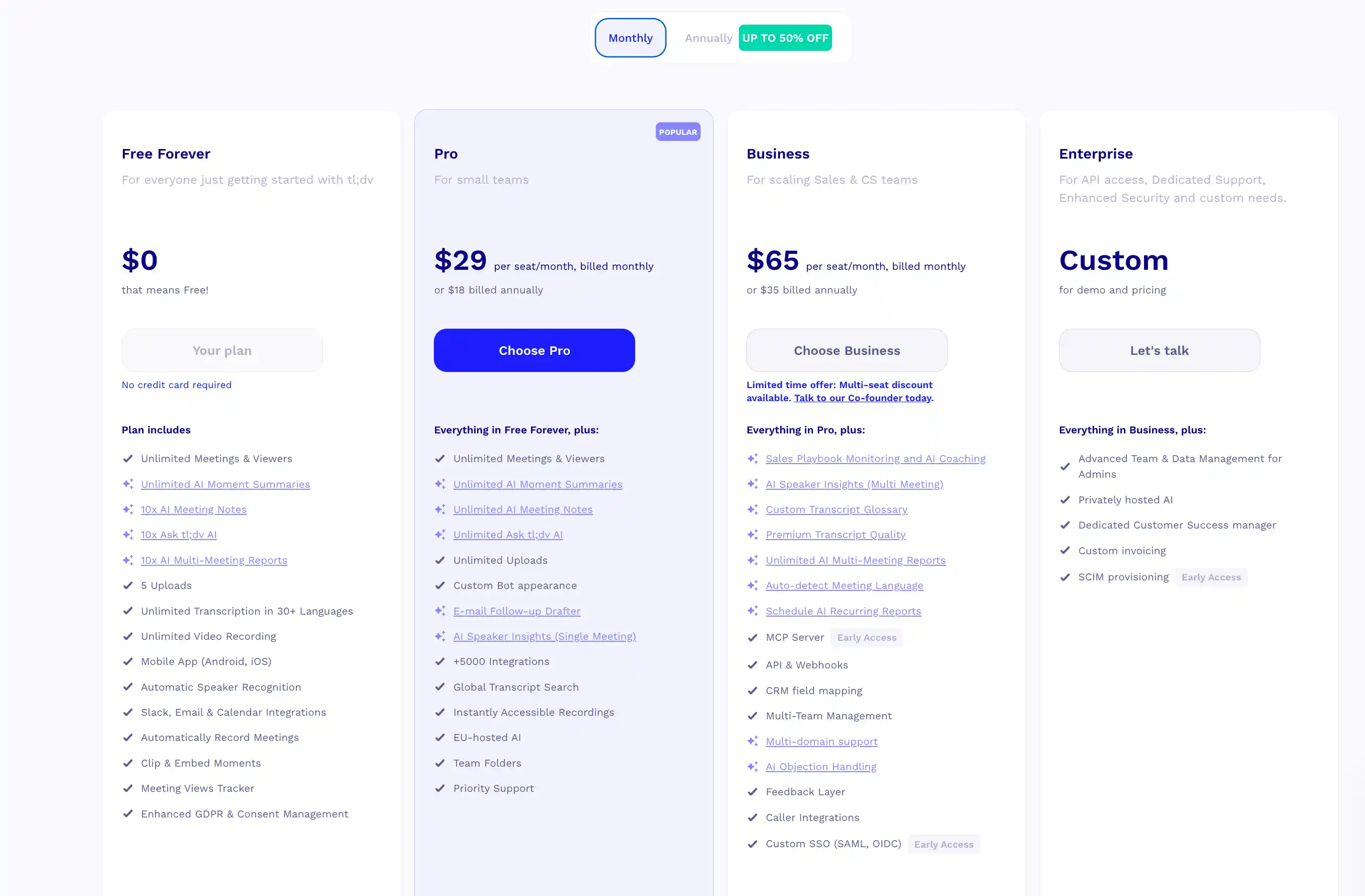
tl;dv's monthly subscriptions are on the expensive side
On the other hand, the monthly (and annual) subscriptions are expensive compared to the competition. Even worse, tl;dv locks many important features behind its priciest tiers.
For example, you need the most expensive, custom-priced Enterprise plan to record and transcribe more than three simultaneous calls. In practice, sales teams or customer support teams have no choice but to pay for the Enterprise plan.
It's a similar story with the AI Coaching Hub, which provides key insights into your sales meetings and other calls — and gives suggestions for improvements. You need the $65-per-month Business tier for this feature, while most competitors would provide it with a basic Pro plan.
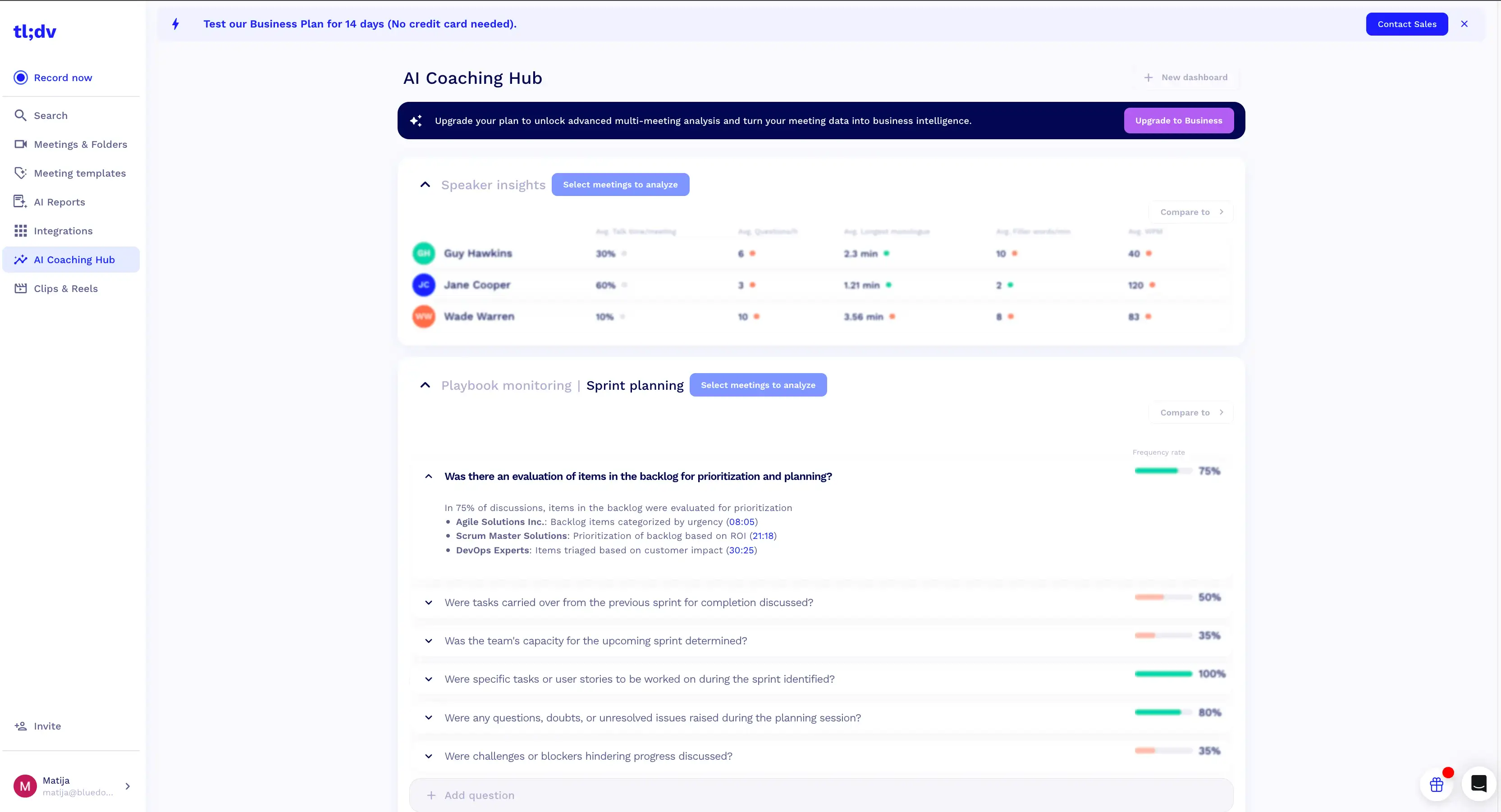
You don't get sentiment analysis of past meetings with the basic Pro subscription.
Personally, my biggest gripe with tl;dv's pricing is the transcription quality, which is also gated. Free and Pro users ($29 per user per month) only get access to a lower-quality transcription model, while the premium-quality subscription is reserved for Business and Enterprise subscribers.
#2. There's No Bot-Free Recording
The only way to record calls with tl;dv is by inviting its bot to your meetings.
For internal meetings, this is fine. But beyond team collaboration, the presence of a bot feels intrusive. If I were a customer on a sales call or in conversation with support staff, a bot that was there to record me would feel off-putting. I wouldn't feel as free to speak my mind.
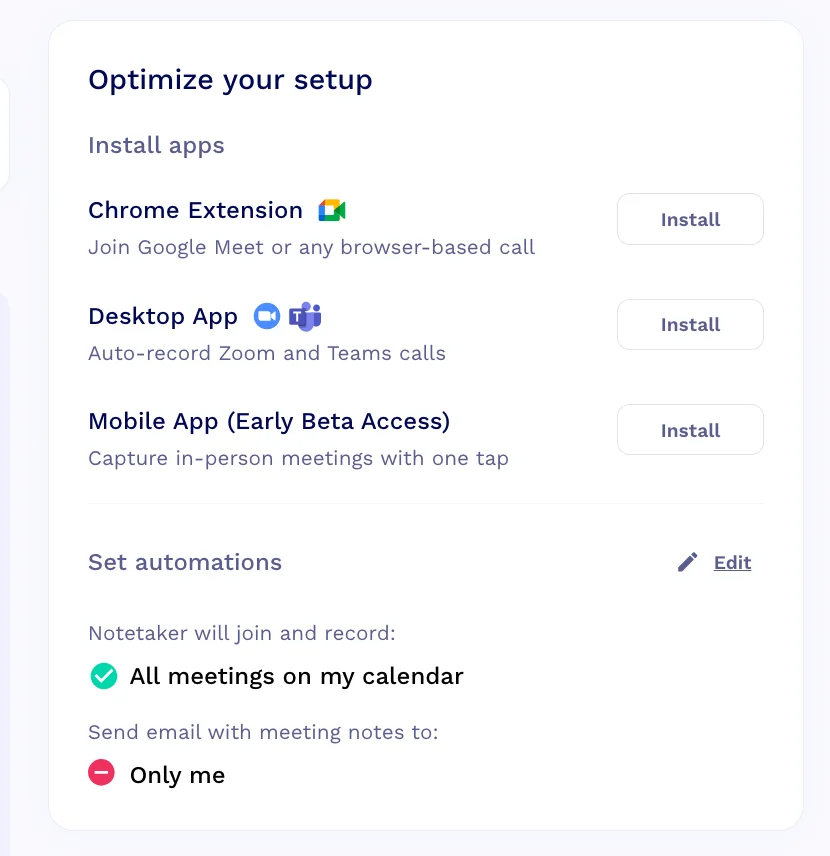
You can't record without a bot in tl;dv
This is why some tl;dv alternatives, like Bluedot or Claap, support recording meetings without a bot. You don't have to explain why you're recording the conversation when it's done discreetly — and it doesn't disrupt the flow of the meeting.
Unfortunately, you can't record bot-free with tl;dv, even if you download their desktop app. The tl;dv mobile app lets you record conversations through the phone's speaker, but that's only an option for in-person meetings.
#3. Slow Customer Support
In my experience, tl;dv's customer support isn't the worst I've seen among AI note takers — but it's also far from perfect.
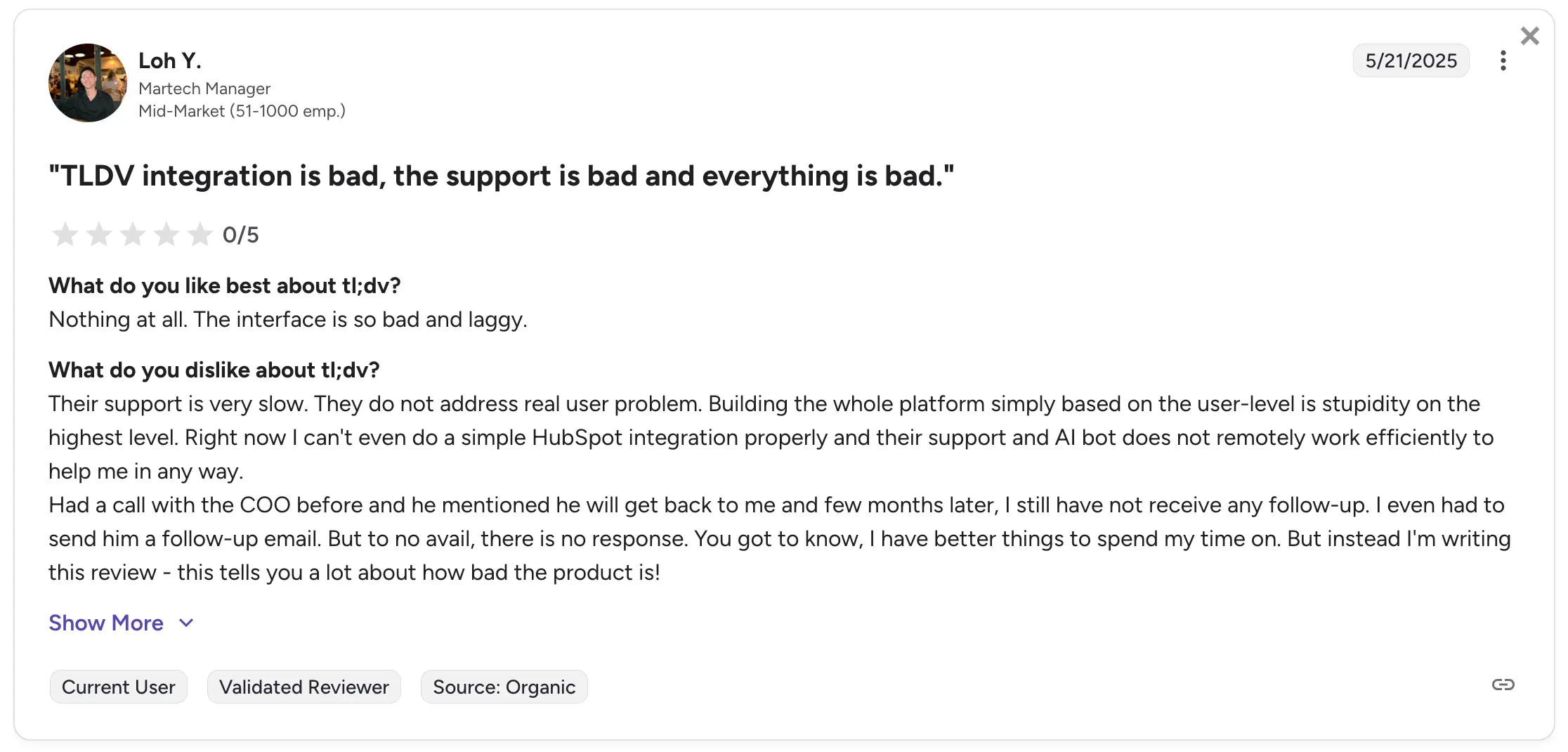
According to one manager in a mid-market martech company, tl;dv didn't respond to his support query even after repeated follow-up emails.
Other users voiced similar complaints — like a talent manager who used tl;dv to take notes during interviews. In his case, tl;dv accidentally gave him a lower-tier account, despite him paying for a year's worth of a pricier subscription. Support was slow to respond and remedy the problem.
When I (or my company) pay for a pricey business plan, I expect two things: advanced features I wouldn't get otherwise, and priority support. We're all human, and mistakes happen — but if I feel they're endemic and not a one-off issue, that's unacceptable.
#4. It Doesn't Support Enough Languages
I work in a geographically dispersed team, with people who speak different languages and come from different countries — on other continents.
We also have customers from all over the world, so our sales teams and support staff really appreciate multi-language support in apps. And that's also why Bluedot supports real-time transcription and meeting notes in 100+ languages.
Unfortunately, tl;dv lags in this regard.
For a comprehensive meeting assistant, tl;dv doesn't invest a lot in language support. It works with only 30-40 languages. This isn't such a big deal for me personally, because I'm a native English speaker — but a lot of our overseas staff can't get meeting insights in their own language via tl;dv. Also, transcription accuracy and speaker recognition are lower, even for supported languages.
What's the Best tl;dv Alternative?
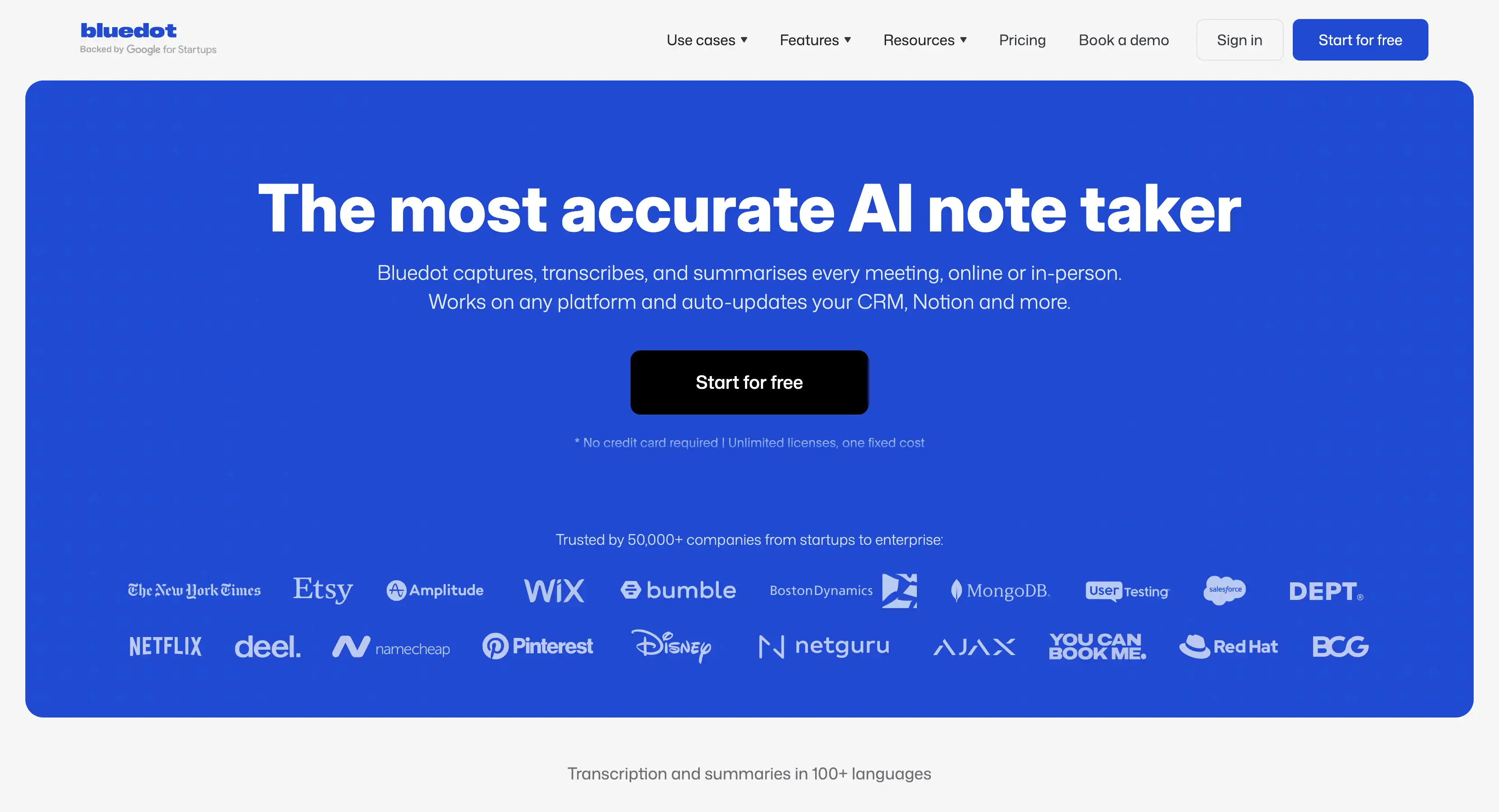
Compared to other AI-powered meeting assistants, Bluedot is the best overall alternative to tl;dv.
Claap, Gong, and plenty of other competitors address some concerns users have with tl;dv. But they introduce new problems of their own, often with steep prices, a lack of integrated video recording, and intrusive bots. Some of them can't record meetings in popular video conferencing tools without a bot present — often a deal-breaker for sales reps.
With Bluedot, you can record without a bot — via a desktop app, mobile app, or a Chrome extension. You get a recording and transcription of meetings discreetly, without offending or alarming anyone.
Most importantly for larger teams, Bluedot doesn't limit the number of simultaneous calls your team can record. In contrast, tl;dv requires a custom-priced Enterprise plan to record more than three calls at once.
Also, Bluedot's transcription accuracy and quality are consistent across all subscription tiers. Higher-paying users get more advanced features and fewer limits, but the quality of meeting transcription is the same for everyone.
After you get your meeting recordings, you can also easily create clips and share them with colleagues — along with AI-generated summaries. And if you need any help, Bluedot's team assists ASAP. The support staff is in-house and deeply knowledgeable of every aspect of the platform.